Private Sector Engagement Strengthens Mozambique Flood Response
Government and UN briefing highlights urgent needs and coordinated pathways for business support
In response to severe flooding across Mozambique, the United Nations Office for the Coordination of Humanitarian Affairs (OCHA) organized an online briefing on 12 February to mobilize private sector engagement in support of the humanitarian response (the recording is available at the end of this article). The session, led by UNDAC’s Private Sector Coordinator in collaboration with the National Institute for Disaster Management and Risk Reduction (INGD) and the United Nations Resident and Humanitarian Coordinator in Mozambique brought together more than 70 participants from major companies, business associations, diplomatic missions, UN agencies and humanitarian partners.
The strong turnout – including major companies operating in Mozambique, leading national business networks, and representatives of the international community – demonstrated the scale of the crisis and the growing recognition that coordinated private sector engagement is critical in such emergencies.
Zooming in on the Humanitarian Crisis
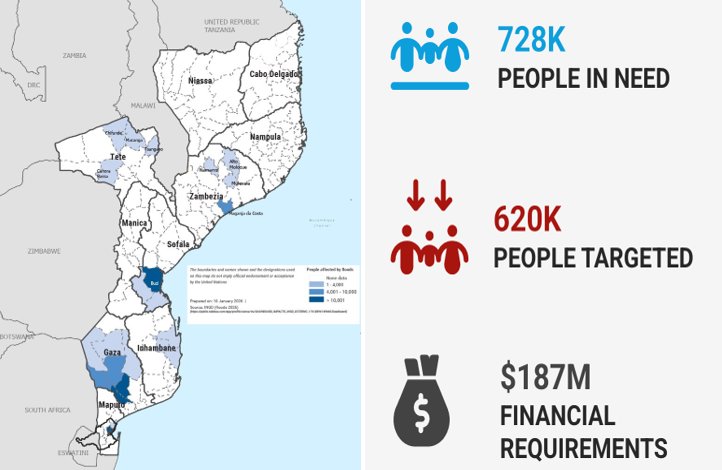
According to the Government of Mozambique, nearly 600,000 people had been affected by flooding as of 19 January 2026, with projections rising significantly as heavy rains and controlled dam releases continue. The Humanitarian Needs and Response Plan (HNRP) Floods Addendum estimates that more than 700,000 people are in need of humanitarian assistance. With more than 600,000 people targeted for immediate support, this will require US$187 million between January and June 2026.
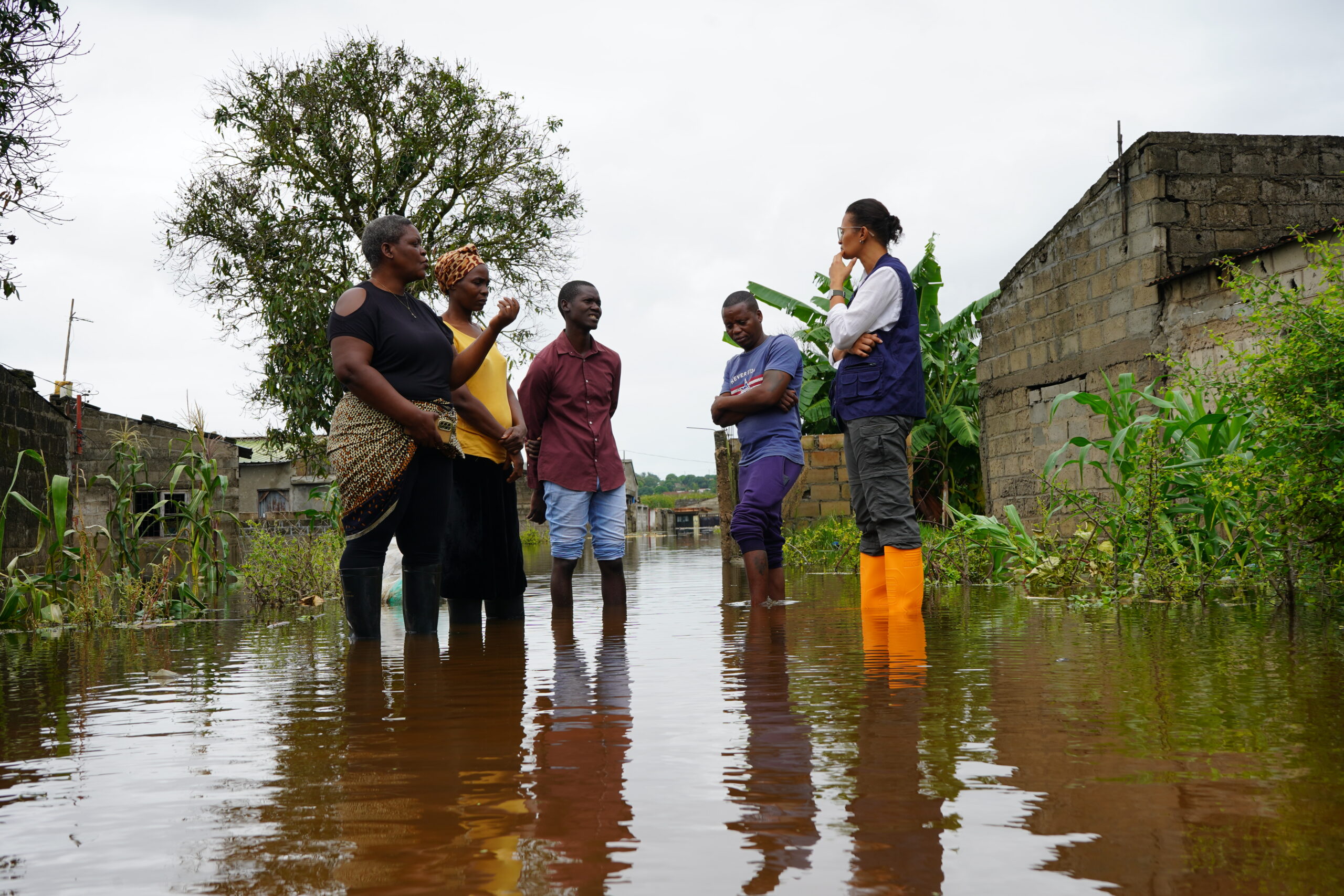
The flooding has affected Gaza Province, which accounts for approximately 75 per cent of the impacted population. Nearly 392,000 people have been displaced, many forced to leave homes constructed from materials highly vulnerable to rainfall.
Infrastructure damage has been extensive. Thousands of kilometers of roads have been affected, disrupting supply chains and limiting access to isolated communities. Health facilities, schools, agricultural land, and livestock have also suffered significant losses, further compounding food insecurity, protection risks, and livelihood disruptions.
The Government formally requested United Nations support, including air assets for rescue operations, humanitarian transport, and logistics assistance.
A Coordinated Response
The response is being led by the Government of Mozambique through INGD and the National Emergency Operations Centre (CENOE), with Provincial Emergency Operations Centres activated in Gaza, Maputo and Sofala Provinces.
The Floods Addendum to the 2026 HNRP outlines three strategic objectives:
- Preventing loss of life through the rapid delivery of essential humanitarian assistance.
- Addressing protection risks and the needs of vulnerable populations.
- Restoring life-sustaining services and enabling early recovery.
Clusters prioritized under the response include shelter and non-food items, water, sanitation and hygiene (WASH), health, food security and livelihoods, protection, logistics, education, and camp coordination and camp management.
Humanitarian access remains a major operational constraint due to flooded transport corridors and damaged bridges. Partners are therefore exploring alternative delivery modalities—including air, riverine, and pre-positioned supplies—to reach isolated populations.
The Strategic Role of the Private Sector
The briefing provided a structured platform for INGD to present priority needs in Gaza and Maputo Provinces, while OCHA outlined how the humanitarian coordination system functions and how businesses can engage responsibly and effectively.
Private sector engagement was framed not as philanthropy, but as operational partnership. Businesses can provide critical capabilities in logistics, connectivity, financial services, engineering, supply chain management, and infrastructure restoration—areas that are central to overcoming current access constraints.
The UN strongly encourages private sector support, particularly through flexible financial contributions, which allow frontline responders to allocate resources according to evolving needs. While in-kind contributions may also be valuable, they are most effective when aligned with verified needs and coordinated through established mechanisms. To date, private sector donations and commitments currently amount to almost 6 million USD, most of which are direct contributions to INGD.
The session also highlighted the importance of responsible engagement, including adherence to humanitarian principles—humanity, neutrality, impartiality and independence—and accountability to affected populations.
Strengthening Coordination and Preparedness
Participants emphasized several opportunities for stronger collective impact:
- Establishing clear single points of contact and structured coordination mechanisms before and during emergencies.
- Improving visibility and mapping of private sector contributions to reduce duplication and identify gaps.
- Integrating critical infrastructure providers into contingency planning.
- Strengthening shared data and information protocols to accelerate decision-making.
The constructive dialogue and strong participation demonstrated sustained demand for specialized private sector briefings and the value of dedicated coordination capacity during emergencies. Such structured engagement enables alignment with Government leadership, improves transparency, and accelerates the mobilization of support.
Find out more about the private sector response to the floods in Mozambique here and if you want to contribute to the response or recovery efforts, please reach out to Rhiza Nery, UNDAC-OCHA Private Sector Coordinator for the Mozambique Flood Response at florian.nery@un.org.
You can view the full briefing here: