Lessons learned from 20 years of partnership in emergency response
During the COVID-19 pandemic, the Red Crescent in Malaysia was struggling to keep their warehouse organized, so DHL Group GoHelp agreed to provide support. When the team arrived on-site, operations were chaotic: there was no formal system in place, and everything was being done ad hoc. However, by mobilizing 50 volunteers and applying a 5-Sigma methodology, DHL Group GoHelp organized the warehouse within three days while also training local staff on maintaining and managing the space. Could the Red Crescent team have figured it out? Perhaps, but getting specialized support made the process easier so that the Red Crescent team could play to their strengths while learning from GoHelp volunteers who were operating in their area of expertise. This is a prime example of the power of partnerships and working together across sectors in disaster management.
A little-known fact is that the United Nations Office for the Coordination of Humanitarian Affairs (OCHA) and DHL Group GoHelp started a partnership two decades ago, back when the United Nations working with a private sector company was out of the ordinary. In fact, two partnerships were established: one between OCHA and DHL Group, and another that also included the United Nations Development Programme (UNDP) to focus on Get Airports Ready for Disasters (GARD).
It wasn’t an easy sell – there were many sceptics. And yet, a few champions continued to invest in the relationships because they saw what others didn’t: a potential for complementarity that went beyond “business as usual” and that could help save lives. Two decades later, these partnerships are a testament to the power of the right kind of partnerships.
DHL Group & OCHA: Lessons learned & growing together over the years
An OCHA colleague who was the focal point for the DHL GoHelp-OCHA partnership for a period compared it to a marriage, because once the partnership agreement was signed, that was the beginning of the work.
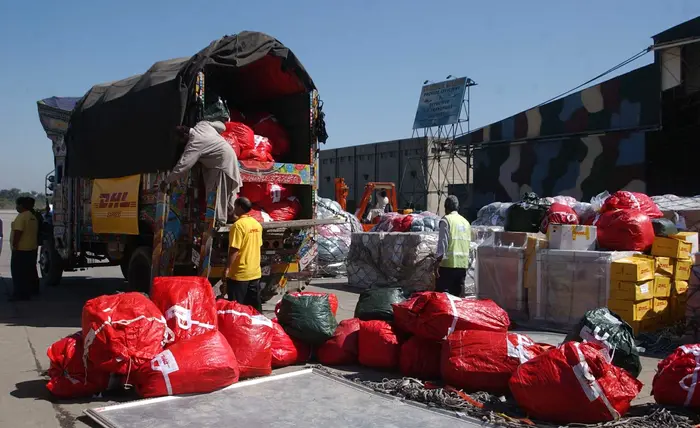
The DHL Group’s expertise was airport logistics to warehousing and everything in-between. OCHA’s mandate of coordination was key to avoid a fragmented or duplicative approach. That translated to DHL Group launching a Disaster Response Team pilot after the tsunami in 2004, and the GoHelp Disaster Management volunteer programme the year after in response to the earthquake in Pakistan. The focus was on airport management, to ensure that during an emergency, a country’s main point of entry could handle their regular air traffic as well as additional traffic generated by humanitarian responders and aid arriving.
Over the years, GoHelp has responded to 77 disasters, moving more than 70,000 tons of life-saving aid in partnership with leading humanitarian organizations.
Two particular “pain points” that were identified and addressed through this partnership include how to manage unsolicited donations, and how to manage customs processes more effectively. In other words, like any true partnership, this one is not static but adaptable. In the future, the Disaster Response Team support could extend to warehouses and even needs assessments.
That’s what we want to see more of: public-private partnerships that stand the test of time through common values, playing to each organization’s strengths and making a difference on the ground.
Looking ahead in the midst of uncertainty
The geopolitical tensions and decisions that have put unprecedented external pressure on the humanitarian system and beyond are the catalyst, but the United Nations and the humanitarian and development sectors have been trying to change and evolve for years. Without knowing how things will look when the dust settles, one thing is clear: we need each other more than ever.
And it’s not about the money.
When businesses like DHL Group take their core skills and resources to contribute them to the humanitarian system, the possibilities are nearly endless. We can improve the agility and flexibility of emergency response processes, streamline information to avoid duplication and ultimately save more lives with less financial resources. In fact, DHL Group is going a step further and has launched the DHL Academy of Humanitarian Logistics, a pro bono capacity-building initiative that strengthens the logistics and supply chain capabilities of humanitarian organizations through practical, expert-led trainings, and assessments.
That’s why we want more businesses and private sector networks such as chambers of commerce at the table – not when a crisis hits, but as of today. To start building those working relationships and prepare for what’s to come, leveraging strengths to balance out systemic vulnerabilities and ensure that we’re more fit for purpose than ever as a collective because we’re working together.
However, understanding the role logistics play in humanitarian response and the impact an organization like DHL Group can have when it works hand in hand with OCHA doesn’t take a lot of effort. As such, is the OCHA-DHL Group-partnership a unicorn? It might be, but that doesn’t mean that the concept and approach isn’t replicable across just about every industry.
For that to work, we need champions – within the UN and within businesses – who can build trust, translate between sectors, and combine a longer-term vision with low-hanging fruit. And if you’re not sure what that means or where to start, reach out – that’s what we’re here for.
The OCHA-UNDP Connecting Business Initiative (CBI) engages businesses before, during, and after emergencies. To find out more, visit www.connectingbusiness.org or connect with us on social media platforms such as LinkedIn and Instagram. You can also reach out to connectingbusiness@un.org.
GoHelp is DHL Group’s disaster management program with UNOCHA, UNDP, WFP, and IOM. It deploys Disaster Response Teams (DRT), conducts Get Airports Ready for Disasters (GARD) workshops, and trains humanitarian logisticians through the DHL Academy of Humanitarian Logistics. Since 2005, GoHelp has supported 77 missions and delivered nearly 70,000 tons of relief aid globally. To find our more, visit https://group.dhl.com/en/sustainability/social-impact-programs/disaster-management.html.