Fifty Years After the 1976 Earthquake: Honoring Guatemala’s Strength, Diversity, and the Future We Choose Together
(You may find the Spanish version below the English text. / Puede encontrar la versión en español debajo del texto en inglés.)
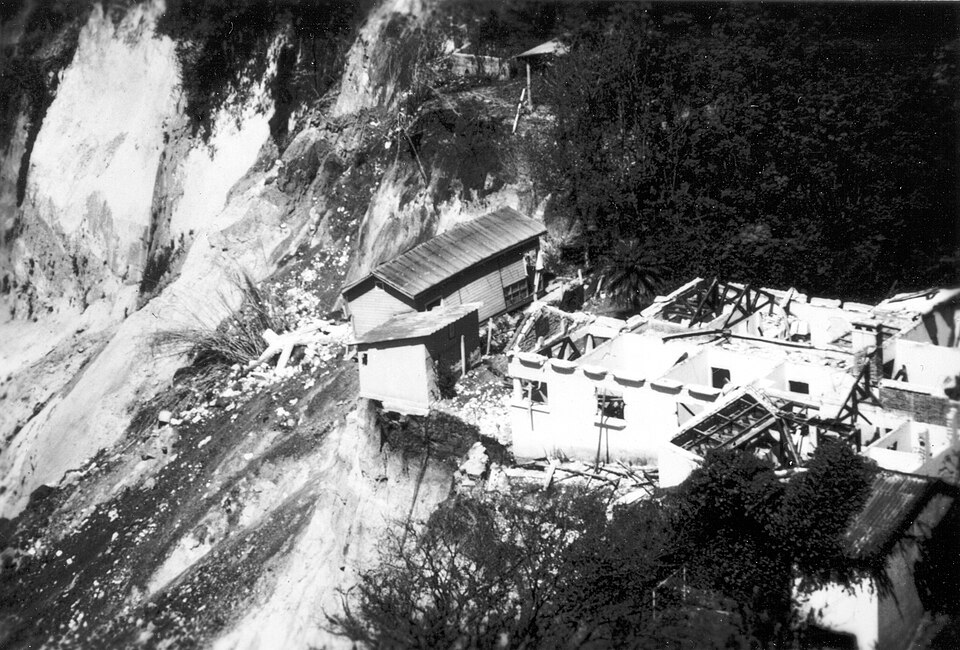
In the early morning of February 4, 1976, Guatemala changed forever. At 3:01 a.m., a 7.5-magnitude earthquake shook the country for 39 seconds, leaving a visible rupture of more than 230 kilometers along the Motagua Fault and altering the lives of millions. Yet beyond the destruction, that moment marked the beginning of a profound transformation—a national awakening that has shaped five decades of progress, resilience, and unity.
Today, as Guatemala reflects on the 50th anniversary of that defining moment, we honor not only the memory of those affected but the enduring spirit of a country that is beautiful, megadiverse, and full of life—a land of volcanoes, mountains, cloud forests, beaches, and a mix of cultures, languages, and communities. However, this richness also brings exposure to multiple natural hazards.
Those 39 seconds, painful as they were, have become a powerful lesson in the resilience of the country’s people and its institutions, strengthening preparedness, reinforcing governance, and inspiring a shared responsibility across every sector, including the private one.
A Country Transformed: What Has Changed?
The Guatemala that once woke up to devastation is a country that has steadily rewritten the way it understands risk. Five decades of hard-earned lessons have shaped a more resilient nation, but three areas show especially meaningful progress, largely fueled by growing collaboration between the public and private sectors.
1. From Reaction to Coordination: Multisectoral Disaster Risk Governance
If the earthquake was the wake-up call, the years that followed became Guatemala’s response. Repeated crises—including the 1976 earthquake and later Hurricane Mitch—pushed the country to rethink how it prepared for emergencies. This shift led to the creation of the National Coordinator for Disaster Reduction (CONRED, based on its Spanish initials) in 1996, established through Legislative Decree 109-96, replacing the old emergency committee and building a civilian-led, prevention-focused system.
Today, Guatemala coordinates disaster risk reduction across communities, government and multilateral institutions, and the business sector, strengthening capacities at local level. This progress is recognized by international partners supporting the country’s emergency architecture.
In 2024, CACIF—Guatemala’s organized business sector and the national representative of the Connecting Business Initiative (CBI) alongside CentraRSE—launched the Corporate Coordination and Humanitarian Emergency Response Committee (CREEH), a milestone for private-sector disaster governance. CREEH was created to strengthen business-sector readiness for humanitarian emergencies, improve communication with authorities, facilitate information and resource exchange, document private-sector contributions, and help mitigate the impact of crises. It also marked the formalization of a working structure where all chambers within CACIF can coordinate prevention, preparedness, and response actions—ensuring the private sector becomes not just a responder, but an active partner in national risk governance.
2. The Rise of Business-Driven Resilience
In recent years, Guatemala’s private sector has quietly—and steadily—become a key player in strengthening the national capacity for resilience. Through partnerships with CONRED, improvements in emergency planning, contributions to reconstruction, and programmes focused on inclusion and communication, businesses have begun to integrate disaster risk management and reduction into how they operate. Programmes aimed at strengthening CONRED capacities, including gender-inclusive and community-focused preparedness initiatives, demonstrate how deeply businesses and humanitarian actors are collaborating today.
This momentum is also reflected in the work of CentraRSE—which together with CACIF serves as Guatemala’s national CBI representatives—who has been training small and medium enterprises (SMEs) through its Gestión Integral del Riesgo a Desastres (GIRD) programme. Their sessions help SMEs strengthen their ability to implement business continuity plans. Such training ensures SMEs, often the most vulnerable but also the most essential engines of the economy, are better equipped to anticipate, absorb, and adapt to disruptions.
This shift recognizes a simple truth: when disaster strikes, companies are not bystanders—they are lifelines for jobs, supply chains, and communities. The more the private sector prepares, the more the whole country—and the companies themselves—stand to gain.
3. Science and Technology Take the Lead
Another lesson was clear: Guatemala needed science and technology on its side. That’s why the country established INSIVUMEH, the national institute dedicated to seismology, volcanology, meteorology, and hydrology—an institution born directly from gaps the 1976 earthquake exposed.
Today, data, maps, and early warnings reach more people than ever. New tools like the INFORM Subnational Risk Index, which evaluates hazards, exposure, vulnerability, and response capacity across Guatemala’s 340 municipalities, now allow the country to understand risk at the local level.This information is used by government, civil society, and companies to support risk-informed decision-making and reduce vulnerabilities.
This technological progress has also extended into emergency communications. In 2025, CACIF announced a landmark partnership with Starlink, SpaceX’s satellite internet service, to strengthen the country’s ability to maintain communication during disasters. As part of this agreement, 56 satellite devices are being deployed nationwide to ensure uninterrupted connectivity for first responders, even when traditional networks fail. This collaboration guarantees real-time situational awareness, faster coordination, and reliable communication for emergency teams—critical factors for saving lives when every second matters.
For the private sector, these advances are transformative. Businesses can now integrate scientific data and resilient communication technologies into continuity planning, strengthening supply-chain resilience, protecting personnel, and minimizing operational disruptions during crises.
The 1976 earthquake in Guatemala is not a story of devastation; it is a story of rebirth, written in the hands of communities and its determination to refuse to be defined by loss.
Fifty years later, Guatemala stands with a clearer understanding of its risks, a stronger institutional system, and a private sector that increasingly recognizes resilience as part of its mission—not an optional “extra”. Because the next 50 years will be written by those who choose to prepare today.
The earthquake did not take Guatemala’s spirit. If anything, it revealed it.
For more information
If you are a country-based or operating in Guatemala, join CBI Guatemala, where businesses can connect with national emergency systems, gain access to risk-reduction tools, coordinate responses, protect their teams, and reinforce community resilience.
If you’re a business leader interested in finding out more about CBI, contact Annik.Tiedt@un.org.
It is not charity; it is strategic, forward-looking leadership.
Because resilience is built before the earth shakes—not after.
***************************
[Español]
Cincuenta años después del terremoto de 1976: un homenaje a la fuerza, diversidad y futuro que Guatemala decide construir
En la madrugada del 4 de febrero de 1976, Guatemala cambió para siempre. A las 3:01 de la mañana, un sismo de magnitud 7.5 sacudió al país durante 39 segundos, dejando una ruptura visible de más de 230 kilómetros a lo largo de la falla del Motagua y transformando la vida de millones. Y sin embargo, más allá de la devastación, ese instante marcó el inicio de una transformación profunda: un despertar nacional que ha guiado cinco décadas de progreso, resiliencia y unidad.
Hoy, al cumplirse 50 años de aquel momento definitorio, Guatemala honra no solo la memoria de quienes fueron afectados, sino el espíritu inquebrantable de un país hermoso, megadiverso y lleno de vida: una tierra de volcanes, montañas, bosques nubosos, playas, con una multitud de culturas, idiomas y comunidades. Esta misma riqueza convive con una exposición constante a múltiples amenazas naturales.
Esos 39 segundos—dolorosos, sí—se han convertido en una poderosa lección sobre la resiliencia de su gente y de sus instituciones. Una lección que ha fortalecido la preparación, reforzado la gobernanza e inspirado una responsabilidad compartida entre todos los sectores, incluido el privado.
Un país transformado: ¿qué ha cambiado?
Medio siglo después, la Guatemala que despertó entre escombros es hoy un país que ha ido reescribiendo, con paciencia y determinación, la manera en que entiende el riesgo. Cinco décadas de aprendizajes se han traducido en una nación más resiliente, pero hay tres avances que destacan, impulsados en gran medida por una creciente colaboración entre los sectores público y privado.
1. De la reacción a la coordinación: gobernanza multisectorial del riesgo
Si el terremoto fue el llamado de atención, los años siguientes fueron la respuesta. Crisis recurrentes —entre ellas el sismo de 1976 y el huracán Mitch—obligaron al país a replantearse cómo prepararse para las emergencias. De esa reflexión nació, en 1996, la Coordinadora Nacional para la Reducción de Desastres (CONRED), creada por el Decreto Legislativo 109‑96 como un sistema civil, preventivo y orientado a la gestión integral del riesgo.
Hoy, Guatemala coordina la reducción del riesgo entre comunidades, instituciones públicas, organismos multilaterales y empresas, fortaleciendo capacidades a nivel local, un avance reconocido por múltiples socios internacionales.
Y el sector privado no se ha quedado atrás. En 2024, el CACIF—representante nacional de la Connecting Business Initiative (CBI), junto a CentraRSE—lanzó el Comité de Coordinación y Respuesta Empresarial ante Emergencias Humanitarias (CREEH). Esta iniciativa marcó un hito en la gobernanza empresarial frente a desastres. Su propósito: fortalecer la preparación del sector privado, mejorar la comunicación con autoridades, facilitar el intercambio de información y recursos, registrar las contribuciones empresariales y mitigar el impacto de las emergencias. Con CREEH, todas las cámaras empresariales cuentan por primera vez con una estructura formal para coordinar acciones de prevención, preparación y respuesta.
2. El ascenso de la resiliencia impulsada por las empresas
En los últimos años, el sector privado guatemalteco ha dado pasos firmes—y visibles—hacia la resiliencia. A través de alianzas con CONRED, mejoras en los planes de emergencia, aportes a la reconstrucción y programas centrados en inclusión y comunicación, las empresas están integrando la gestión del riesgo en el corazón de sus operaciones.
Esto también se refleja en el trabajo de CentraRSE, que junto a CACIF representa a Guatemala en CBI. A través de su programa Gestión Integral del Riesgo a Desastres (GIRD), CentraRSE capacita a pequeñas y medianas empresas (PYMES) para que fortalezcan su capacidad de implementar planes de continuidad del negocio y responder de manera ordenada ante incidentes. Así, las PYMES—las más vulnerables, pero también las más esenciales para la economía nacional—están mejor preparadas para anticipar, absorber y adaptarse a las interrupciones.
La premisa es sencilla: cuando llega un desastre, las empresas no son espectadoras. Son el puente que mantiene empleos, cadenas de suministro y comunidades enteras. Mientras más se preparan, más se fortalece el país… y ellas mismas.
3. La ciencia y la tecnología toman la delantera
Otra lección fue contundente: Guatemala necesitaba ciencia y tecnología como aliadas. De ahí surgió INSIVUMEH, encargado de la sismología, vulcanología, meteorología e hidrología, una institución nacida directamente de las fallas expuestas en 1976.
Hoy, los datos, mapas y sistemas de alerta temprana llegan a más personas que nunca. Herramientas como el Índice de Riesgo Subnacional INFORM permiten entender el riesgo con precisión municipal, información clave para gobiernos, organizaciones y empresas.
Y la tecnología también ha revolucionado las comunicaciones en emergencias. En 2025, CACIF—como representante nacional de CBI junto a CentraRSE—anunció una alianza histórica con Starlink, el servicio satelital de SpaceX, para garantizar conectividad en medio de desastres. Se desplegarán 56 dispositivos satelitales en todo el país para asegurar comunicación continua incluso cuando las redes tradicionales colapsan. La coordinación ágil y la conciencia situacional en tiempo real pueden marcar la diferencia entre la vida y la muerte en una emergencia.
Para las empresas, estos avances son transformadores: permiten integrar datos científicos y tecnología de comunicación resiliente a sus planes de continuidad, proteger al personal y reducir interrupciones operativas.
El terremoto de 1976 no es, en su esencia, una historia de destrucción. Es una historia de renacimiento, escrita por las manos de comunidades que se niegan a definirse por la pérdida.
Cincuenta años después, Guatemala es un país con mayor claridad sobre sus riesgos, con instituciones más sólidas y con un sector privado que empieza a ver la resiliencia no como un gesto voluntario, sino como parte fundamental de su misión.
Porque los próximos 50 años serán escritos por quienes decidan prepararse hoy.
El terremoto no le arrebató a Guatemala su espíritu. Al contrario: lo reveló.
Para más información
Únete a CBI Guatemala, donde las empresas pueden conectarse con los sistemas nacionales de emergencia, acceder a herramientas de reducción del riesgo, coordinar respuestas, proteger a sus equipos y fortalecer la resiliencia comunitaria.
Si quieres mas información sobre CBI en general, puedes contactar Annik.Tiedt@un.org.
No es filantropía. Es liderazgo estratégico y visionario.
Porque la resiliencia se construye antes de que la tierra tiemble, no después.