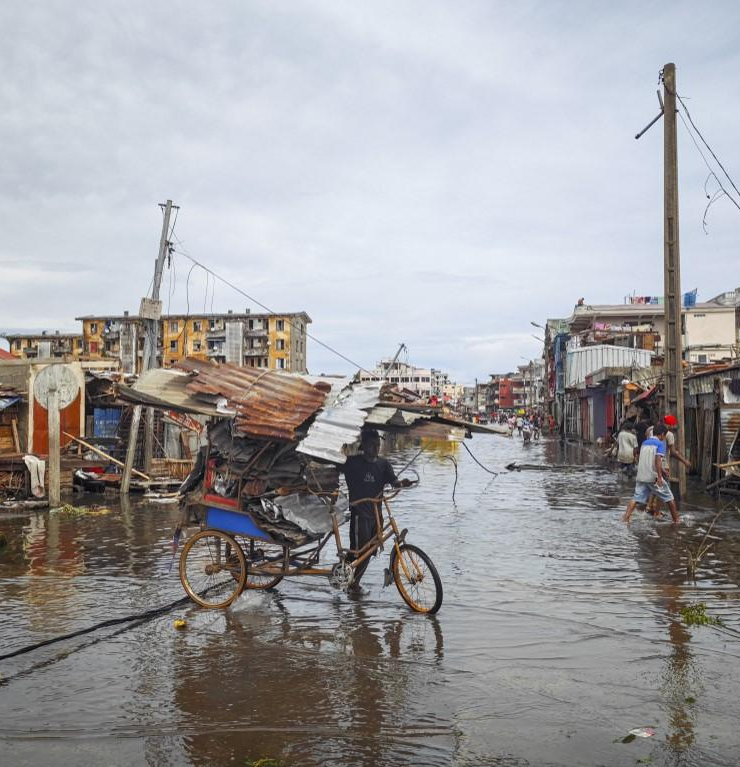
Madagascar has been struck by two successive tropical cyclones in the space of less than two weeks, resulting in one of the most severe humanitarian emergencies the country has faced in recent years. Tropical Cyclone Fytia made landfall on the night of 5–6 February 2026, traversing the country from west to east and devastating nine regions across 38 districts. Before communities could begin to recover, Tropical Cyclone Gezani — an intense tropical cyclone with sustained winds of up to 250 km/h — made landfall near Toamasina on 10 February, compounding existing humanitarian needs and stretching response capacity to its limits.
The cyclones devastated multiple regions: Fytia hit Boeny, Sofia, and others with heavy rains and floods; Gezani struck Atsinanana hardest, destroying up to 90% of Toamasina (second-largest city and key port), including homes, schools, hospitals, roads (e.g., RN2 blocked), power, and water systems. Combined impacts include over 68,000 homes damaged/destroyed, hundreds of classrooms and health facilities affected, and risks of disease from water contamination.
The Government of Madagascar has called for international solidarity. National authorities, supported by the UN and humanitarian partners, are leading search and rescue, evacuation, shelter, and food assistance operations. The scale and geographic spread of needs, however, continue to outpace available resources.
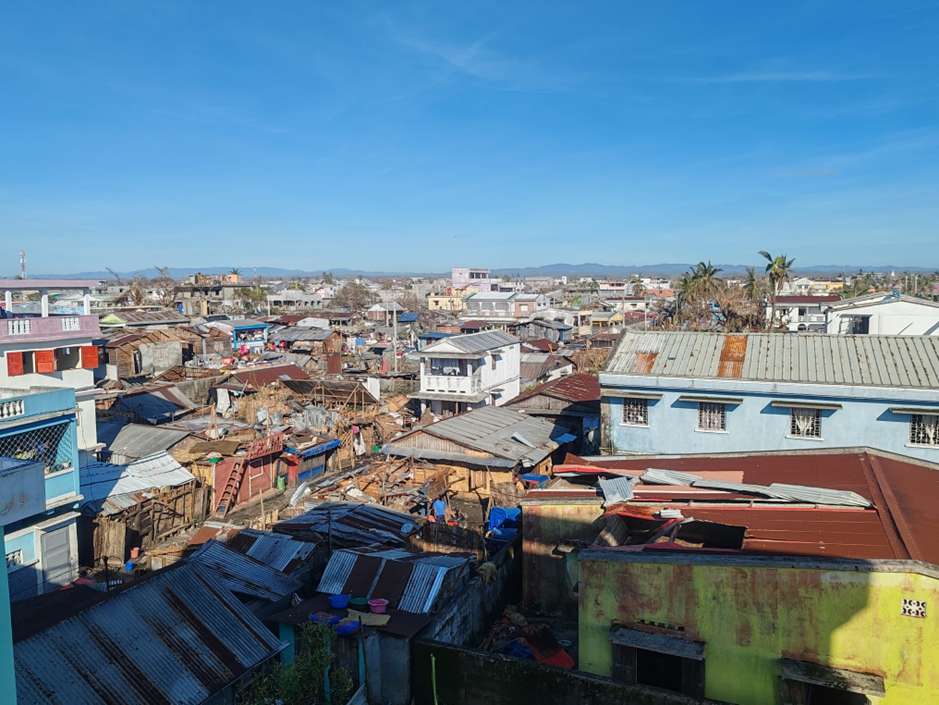
Private Sector Mobilization and Response Efforts
From the first hours of both emergencies, Madagascar’s private sector mobilized immediately through the Private Sector Humanitarian Platform (PSHP Madagascar) — CBI’s Member Network in the country. PSHP participated in the national Comité de Réflexion des Intervenants en Catastrophes (CRIC) meetings convened after Cyclone Fytia’s landfall, ensuring private sector voices and capacities were integrated into the broader humanitarian coordination architecture from the outset.
For Cyclone Gezani, PSHP activated their hybrid Business Emergency Operations Centre (BEOC) to coordinate the response and deployed a team to Toamasina, where staff are conducting assessments and distributing aid in close coordination with local authorities and the National Bureau for Risk and Disaster Management (BNGRC).
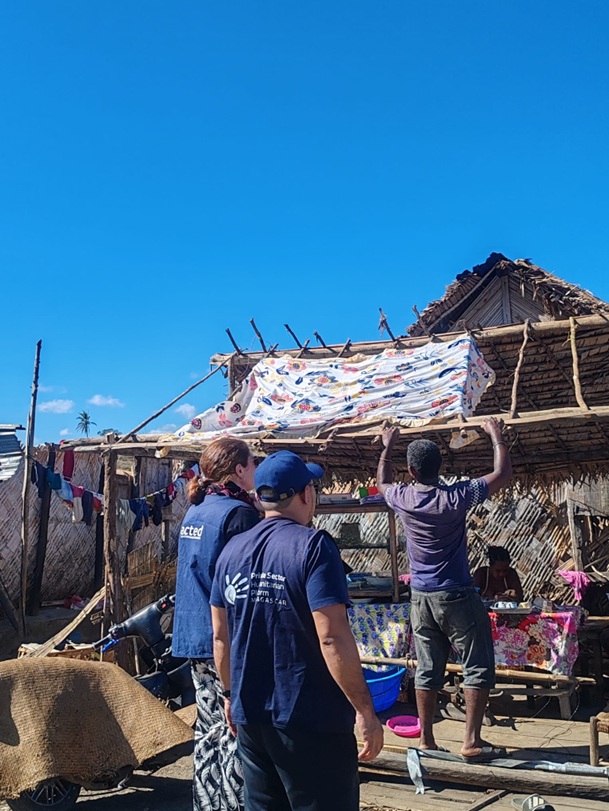
PSHP Madagascar Response Activities:
- Working with BNGRC, PSHP Madagascar coordinated with YAS Madagascar the release of early warning messages sent via SMS.
- In-kind donations: food supplies (rice, oil, legumes), hygiene kits, tarpaulins, school kits, WASH kits
- Logistics support: transport of aid, communication equipment
- Financial contributions: funding for response operations
- Technical expertise: reconstruction, water/sanitation, health and education
- Emergency shelter: urgent provision of tents for displacement sites
Following the landfall of Cyclone Gezani, several companies have already activated support through the PSHP coordination mechanism, including Imperial Brands, Yas, Fondation Axian, NEA, and CGVH. Assessments are ongoing and PSHP is coordinating additional corporate engagement.
These dual cyclone responses underscore the strategic importance of the private sector as both an operational and financial partner in crisis response — bridging emergency relief with recovery, and demonstrating that coordinated private sector action can meaningfully complement national and international humanitarian efforts.
How to help?
PSHP continues to work with government and humanitarian agencies to coordinate private sector response and recovery efforts.
For further information on how to help and coordinate directly with local actors, please visit http://pshp-mada.org/ or contact the PSHP directly pshp@pshp-mada.org / 034 00 180 43 / 034 00 310 70 and/or connect with Rhiza Nery at florian.nery@un.org.
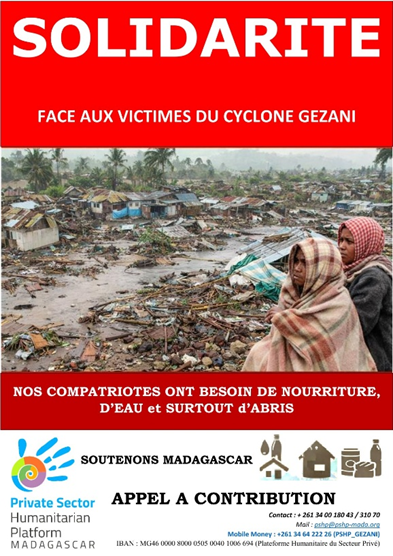
Note: This emergency is on-going, and as such, this page is subject to frequent updates.