Connecting Businesses, Connecting People: Notes from a CBI Deployment in Venezuela
- Venezuela
- Global
- Latin America and the Caribbean
- Recovery
- Response
- United Nations Development Programme (UNDP)
- United Nations Office for the Coordination of Humanitarian Affairs (OCHA)
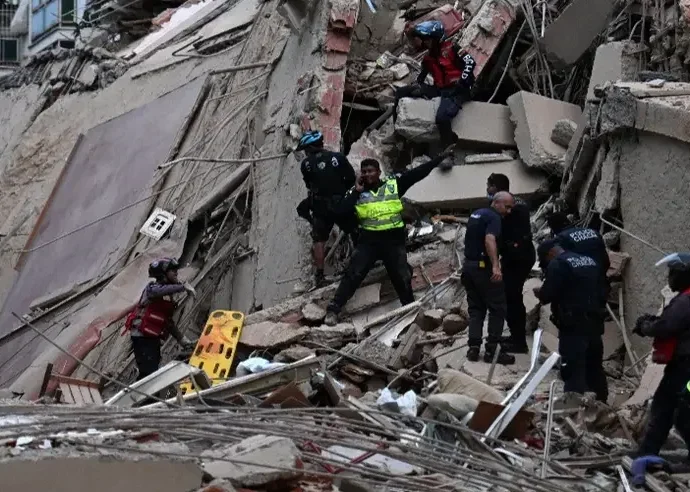
On August 10, I was finishing writing my handover note. Six weeks of work as OCHA-UNDP Connecting Business Initiative (CBI) Emergency Private Sector Coordinator, deployed to Venezuela after the two earthquakes that struck the country on June 24. My handover was condensed into a document for the person who’d carry it forward, as my deployment was coming to an end. But it was also closing a longer chapter, as this is my last deployment with CBI.
That morning, my mom called. An earthquake had hit Colombia, my home country where much of my family lives. She, my dad, and the rest of my family had evacuated onto the street in Bogotá. They were fine, but scared. And so was I, far away with nothing I could do but listen.
I sat with that for a while and I prayed. Then went back to writing. For six weeks, I’d been the person explaining to Venezuelan businesses how the humanitarian system works, how their donations, their capacity, their willingness to help could reach the people who needed it after the earthquakes there. I’d spent hours in conversations with cluster leads, with company representatives who’d never engaged with the UN system before, trying to close the gap between “we want to help” and “help actually arrives”. And that same morning, my own family was living the same fear that sits on the other side of that gap.
I don’t think I’ve ever felt so many things at once: pride in what we’d built, the strange grief of closing a chapter, fear for people I love, and a much sharper sense of why any of this matters. The next emergency isn’t an abstraction in a workstream table. It’s someone’s parents standing outside in the early morning, waiting to know if it’s safe to go back in.
Accounts from the work on the ground
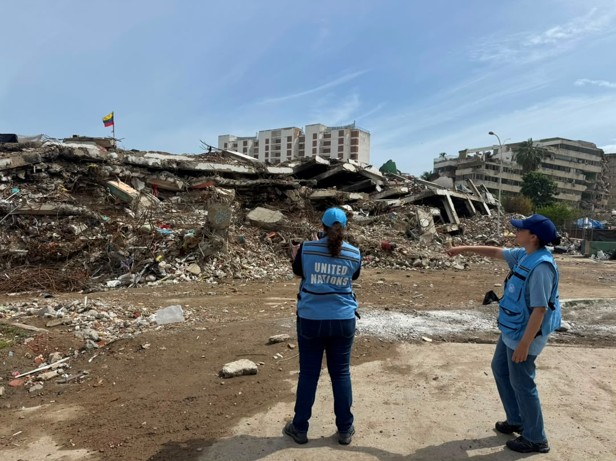
From June 28 to August 11, I deployed to Venezuela as part of a United Nations Disaster Assessment and Coordination (UNDAC) team, serving as CBI’s Emergency Private Sector Coordinator for the earthquake response (CBI is a joint OCHA-UNDP mechanism that mobilizes and coordinates private sector engagement before, during, and after crises). The work fell into two overlapping phases: the emergency response, and the shift toward early recovery.
During the emergency phase, my focus was on turning private sector goodwill into coordinated action, hand-in-hand with OCHA Venezuela. Companies, chambers and business networks across Venezuela and worldwide wanted to help, many engaging with the humanitarian system for the first time. My role was to orient them: explaining how the humanitarian architecture works, who the humanitarian clusters are, and how offers of cash as well as in-kind goods or services get channeled to where they’re needed. I facilitated direct communication between the private sector and the Inter-Cluster Coordination Group, so that cluster leads in WASH, Health, Shelter, Livelihoods, Education and Protection could match offers against needs in real-time rather than in isolation. For companies interested in procurement rather than donation, I guided them toward registering on UNGM.org, opening a formal channel for future opportunities.
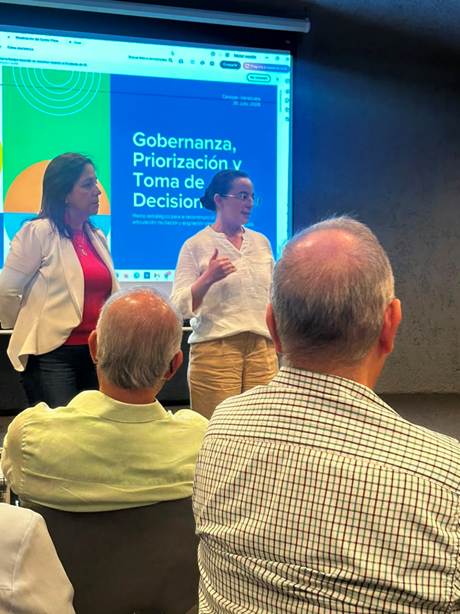
As the response moved into early recovery, the work shifted toward institution-building. I supported the Resident Coordinator’s Office, UNDP, and the UN system in Venezuela in shaping the private sector’s longer-term role, helping draft and align terms of reference for a proposed Private Sector Working Group, supporting capacity assessment meetings with up to 40 private sector representatives, and advocating for engagement around the Post-Disaster Needs Assessment process. One highlight was organizing and delivering Venezuela’s first international peer-to-peer exchange: more than 30 Venezuelan companies and business associations heard directly from counterparts at Mexico’s CENACED and Chile’s Desafío Levantemos Chile, two CBI Member Networks who shared hard-won lessons from their own earthquake, tsunami, and volcanic eruption responses; everything from reconstruction financing models, institutional structures to the evolution of volunteer-led networks into standing coordination platforms.
By the end of my deployment, CBI had engaged over 30 private sector organizations, helped bring private sector perspectives into discussions with the Emergency Relief Coordinator, and laid the groundwork for a potential CBI Member Network in Venezuela going forward.
Achievements like those are easy to write in a handover note. What’s harder to put into words is what six weeks of that work actually leaves you with. And honestly, some of it I only understood fully that morning in August, sitting with the phone still warm in my hand.
I learned that goodwill on its own isn’t enough. Companies wanted to help, often within hours of the earthquakes, but wanting to and knowing how to are two different things. Without someone walking them through where the needs actually were, well-meant donations could just as easily miss the mark as land where they mattered. So much of my job was simply being that entry point, the person who could say here’s who to talk to, here’s what’s needed, and here’s how this reaches someone.
I also learned that connection doesn’t happen by itself. Clusters knew what people needed. Businesses knew what they had to give. But nothing automatically put those two things in the same room. Somebody has to actively hold that space, sit between the acronyms and the spreadsheets and the very real families waiting for a hospital tent or a debris removal crew, and keep translating until the match actually happens.
And I learned that the quieter work, the recovery work, is where things take root. The emergency gets everyone’s attention. But it’s in the weeks after, drafting terms of reference, aligning working groups, sitting in a video call so that Venezuelan companies could hear from CBI Member Network representatives in Mexico and Chile who’d lived through their own disasters… That’s where something durable gets built. That part should especially get everyone’s attention and applause.
What I’m carrying forward
I handed over that note and left Venezuela the next day. Somewhere between the phone call and the flight home, this deployment stopped being just a job on my CV and became something I’ll carry with me: the reminder that the next emergency everyone plans for is never really next. It’s already happening to someone, somewhere, while the rest of us are still writing the report on the last one.
CBI’s job is to make sure that when a crisis happens, the people who want to help and the people who need help aren’t separated by a system neither of them fully understands. That’s slower, less glamorous work than it sounds. It’s terms of reference and working groups and peer exchanges and a hundred small conversations with cluster leads and company reps. But it’s also, some days, the difference between goodwill that goes nowhere and goodwill that reaches someone in time.
I’m proud of what we built in Venezuela. I’m grateful to hand it off to someone who’ll keep building it. And I’m thinking of my family, and everyone else’s family, still on the other side of the next call no one wants to get.
To the CBI team continuing this in Venezuela and elsewhere, and to my family who reminded me why any of it matters: Gracias de todo corazon.
The OCHA-UNDP Connecting Business Initiative (CBI) also set up a donation dashboard to keep track of contributions to the Venezuela earthquakes emergency response. You can visit it here. If your company or organization has contributed or received cash or in-kind contributions not yet reflected here, please reach out to connectingbusiness@un.org so we can update the dashboard accordingly.