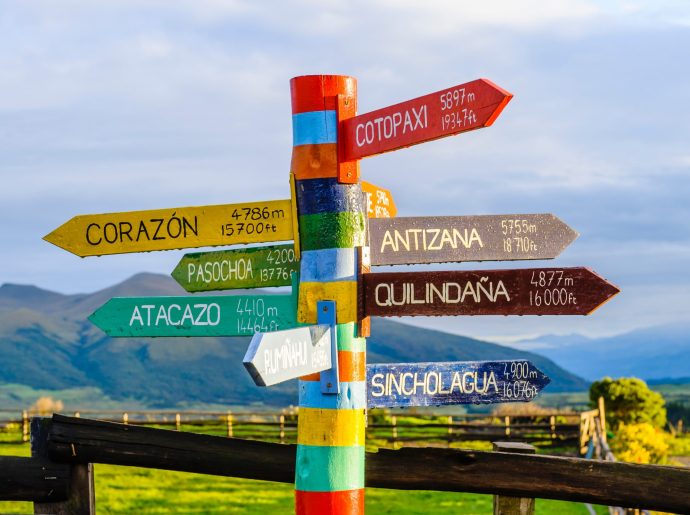
An interview with sports- and businesswoman María José Hernández from Ecuador
María José Hernández has been engaged with the Ecuadorian Chamber of Industries and Production – a CBI Member Network – since she was an intern. She shares some of her experience including how Ecuadorian businesses mobilized during the pandemic, and is an avid sportswoman. We interviewed her as part of our series featuring leaders in disaster management and in the context of International Women’s Day 2025.
How did your engagement in private sector disaster management start, and how has it evolved over the years?
My journey in this space started in January 2024 when I assumed the Directorate of Sustainability and Local Development with the Ecuador Chamber of Industries and Production (CIP), an OCHA-UNDP Connecting Business initiative Member Network.
A memorable experience in this context was the trip I took to the Philippines to learn more about the Emergency Operations Center of the Philippine Disaster Resilience Foundation (PDRF), its good practices, and its lessons learnt. This exchange resulted in the signing of a Memorandum of Understanding with other institutions in the country to be able to build a Private Sector Emergency Operations Center for Ecuador, which I am excited to say we are currently working on.
As for CIP, its participation of in private sector disaster management began several years ago, with the aim of actively supporting national and local authorities in emergency situations in an organized manner. Today, CIP not only facilitates the delivery of donations, but also participates in the creation of public policies, training the private sector in risk management and implementing innovative solutions to improve emergency response
What is the most powerful story you know that exemplifies how local or global business has made a difference in disaster management?
One of the most impactful stories that exemplifies the power of collaboration between the private and public sectors in disaster management is the response to the COVID-19 pandemic in Ecuador. At a time of unprecedented crisis, the productive sector came together to ensure that the country could face the health emergency quickly and effectively.
Through a strategic alliance with the National Government, CIP led one of the largest business support initiatives, achieving:
- The administration of first, second, and booster doses to more than 1.5 million people throughout the country, facilitating access to vaccination and accelerating the immunization process.
- The donation of 15 million essential medical supplies, including syringes, sodium chloride, masks, alcohol and ultra-freezers.
- The establishment of 118 vaccination centers in business establishments, decentralizing access and guaranteeing that workers and communities had a nearby point to be immunized.
- The creation of the United for Ecuador Trust, through which more than 120 donor companies channelled financial and logistical resources to strengthen the vaccination process and health response.
This experience demonstrated the impact that the private sector can have in disaster and emergency management when working in a coordinated and supportive manner. Beyond immediate support, this initiative set a precedent for how companies can be key agents in the country’s resilience in the face of future crises.
What did you do before you got involved with CIP?
I have always been involved with CIP, and with the union sector. I started at CIP at the age of 21, when I was an intern. After that, they offered for me to stay as part of the Technical Management. For five years I was able to get to know the productive sector of my country and see how it was evolving towards a much more sustainable development. Then I moved to New York and lived in the Big Apple for three years, learning everything and from everyone.
I returned to Ecuador in 2021 and led the Swiss Ecuadorian Chamber of Industries, Commerce and Services – Swisscham Ecuador – a trade association whose objective is to strengthen commercial relations between Ecuador and Switzerland. From this institution and working together with the Swiss Embassy in Ecuador, I began my experience in risk management.
Then I moved to Guayaquil, leaving the union sector a bit aside. I assumed the direction of a vocational training project with the Junta de Beneficencia, a private charitable organization. Guayaquil did not last long and the union sector called again. I rejoined CIP – an institution that feels like home – in 2022.
What are some of your interests or passions outside of disaster management?
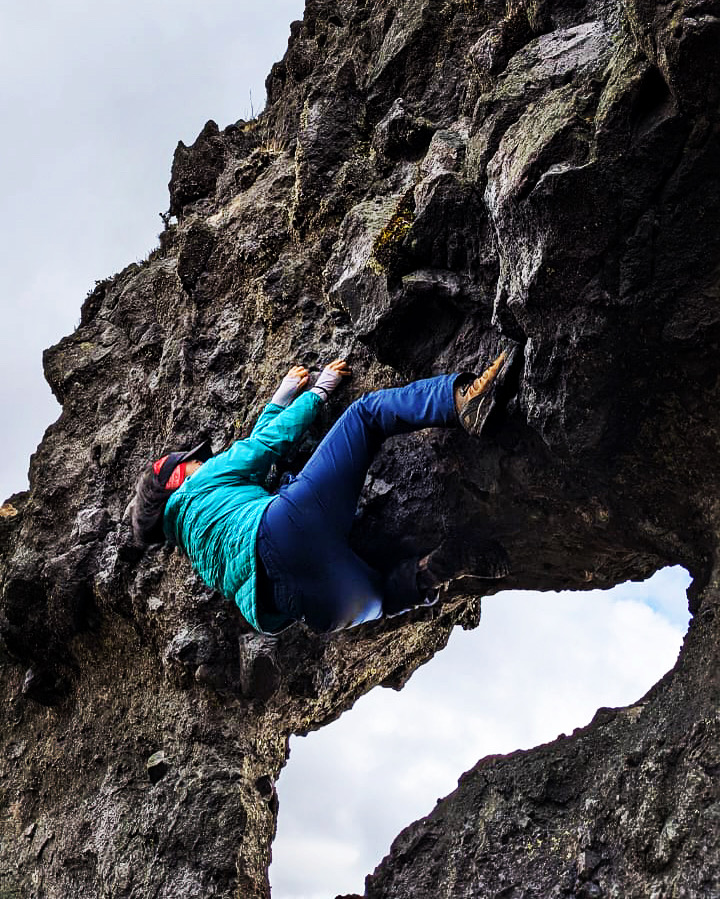
I am passionate about sports, especially if they are outdoors. I practice rock climbing – going up and down mountains fills me with happiness, and trail-running has taken me along wonderful paths in the middle of the mountains. Diving is something that I enjoy very much, even more so when I can do it in the Galapagos Islands, the enchanted islands of my beloved Ecuador.
If I’m not exercising, the kitchen is another of my favourite places. Cooking makes me happy, it de-stresses me, it makes my creativity explode. There is nothing that a good plate of food cannot cure and if it is with friends, even better.

What advice do you have for women starting out in the private sector disaster management space?
I would tell them to go to into the field, to get know the companies, what they do, their processes, the community that is part of these companies, their vulnerabilities. That is where true knowledge lies. This helps you build and solidify trust between both of you, which will allow you to generate support networks more quickly in times of need.
What would you like to say to your 20-year-old self or what is your message for young people?
To both my 20-year-old self and young people, I would tell them that what is real in life comes with time, with work, with effort, with practice, with determination, but above all that it comes with JOY. They should enjoy each stage and every process, and their journey, wherever it takes them.
Do you have a personal motto or life philosophy?
Always remain humble and help others whenever possible, because based on who you are or what you have, there is always an opportunity to help others.