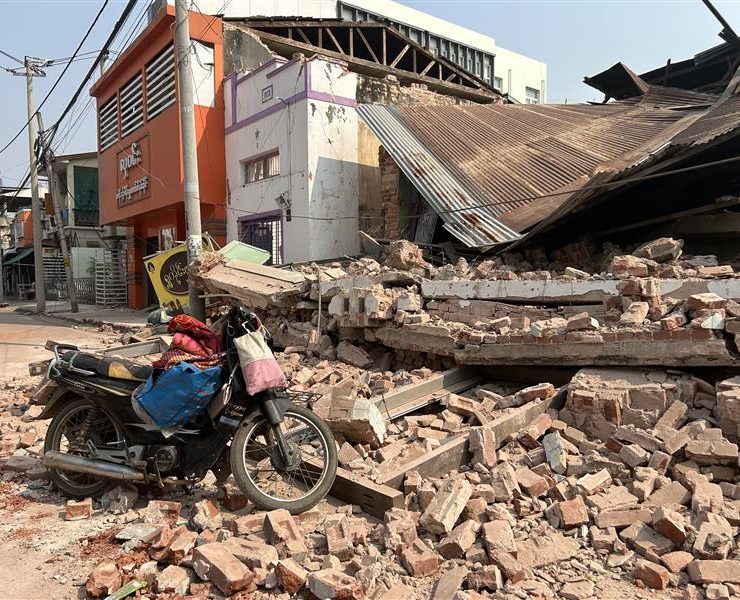
On 28 March 2025, a powerful 7.7-magnitude earthquake struck near Mandalay, Myanmar’s second-largest city, causing widespread devastation across central regions, including Sagaing and Mandalay. As of April 2, the death toll has reached 2,886, with 4,639 individuals injured and 373 reported missing. The earthquake resulted in significant destruction of infrastructure, including collapsed buildings, bridges, and essential services. Over five million people have been severely affected, many in remote areas now cut off due to damaged transport routes.
United Nations OCHA has deployed UN Disaster Assessment and Coordination (UNDAC) teams and the International Search and Rescue Advisory Group (INSARAG), with colleagues in-country and from the region supporting the coordinated response. The disaster has exacerbated an already fragile situation, with the ongoing civil conflict and economic instability in the country. OCHA has highlighted critical shortages of shelter, water, and medicine, with many affected individuals lacking basic shelter, electricity, and running water.
In response, the Philippine Disaster Resilience Foundation (PDRF), in partnership with the Connecting Business initiative (CBI), hosted a virtual Network Briefing on the Myanmar earthquake. With support from the Union of Myanmar Federation of Chambers of Commerce and Industry, John Aung Zaw Oo provided critical on-the-ground updates and outlined immediate needs. The ASEAN Coordinating Centre for Humanitarian Assistance on disaster management (AHA Centre) Assistant Director for Disaster Monitoring & Analysis, LA Dimailig, and CBI Deputy Programme Coordinator, Rhiza Nery, also shared updates on the ongoing response efforts of the AHA Centre and OCHA, respectively.
With over 120 participants, including international partners and numerous business representatives, the briefing served as a platform to discuss response strategies and explore potential augmentation plans in collaboration with national governments and humanitarian actors. As part of the ASEAN community, PDRF reiterated its commitment to supporting affected communities in Myanmar and strengthening regional disaster resilience efforts.
The DHL Group, has been actively involved in disaster response efforts in Myanmar, deploying two Disaster Response Teams (DRTs) to assist in relief operations. These teams collaborated closely with eight local DHL colleagues on the ground, ensuring effective coordination and logistics support. Additionally, five team members from DHL’s regional and global offices provided remote assistance to bolster the on-site efforts. This initiative is part of DHL’s GoHelp programme, a strategic disaster management partnership with OCHA established in 2005. Over the past 20 years, this collaboration has enabled DHL to contribute its logistics expertise to humanitarian relief efforts worldwide.
Take action
- What businesses can do: Businesses of all sizes can play a vital role in preparing for, responding to, and recovering from crises. Whether by supporting logistics, providing essential goods and services, offering technical expertise, or working directly with communities, the private sector contributes to saving lives and strengthening resilience.
- How to support: We encourage private sector contributions through the official UN emergency appeal crisisrelief.org.org/myanmar-earthquake. However, if your company or business network donates or plans to engage in any way, please inform the CBI team so we can ensure visibility, coordination, and explore opportunities for joint engagement to avoid a duplication of efforts, and save more lives.
- Who to contact: For more information or to share your efforts and contributions support, contact connectingbusiness@un.org and the Regional Lead for Asia and the Pacific, Sadhana Mohan, at sadhana.mohan@un.org.