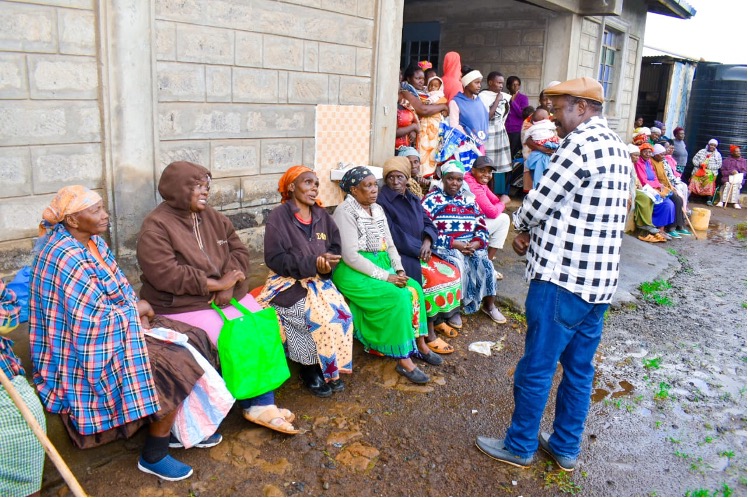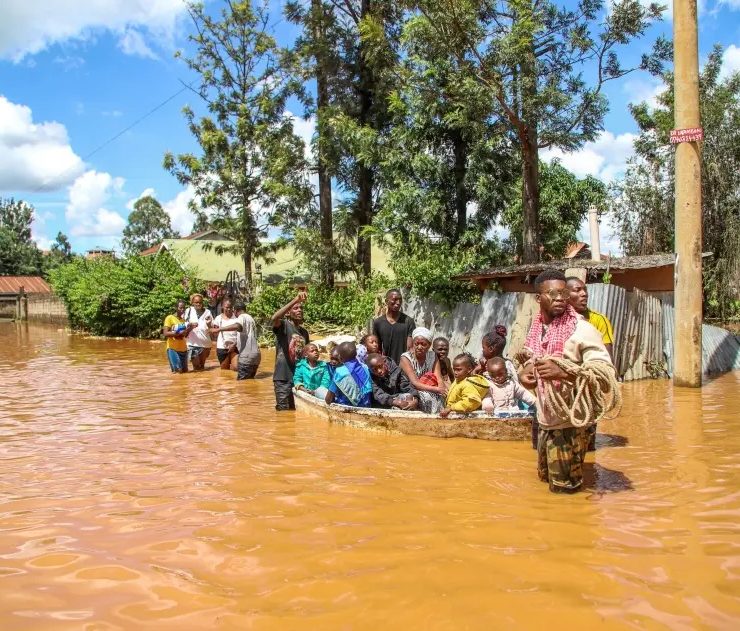
In late March, the rainy season in Kenya began, bringing heavy storms and flash floods to many areas of the country. These floods have led to unfortunate consequences, including the loss of lives, displacement of nearly 3,000 households, the death of over 339 livestock and significant damage to croplands.
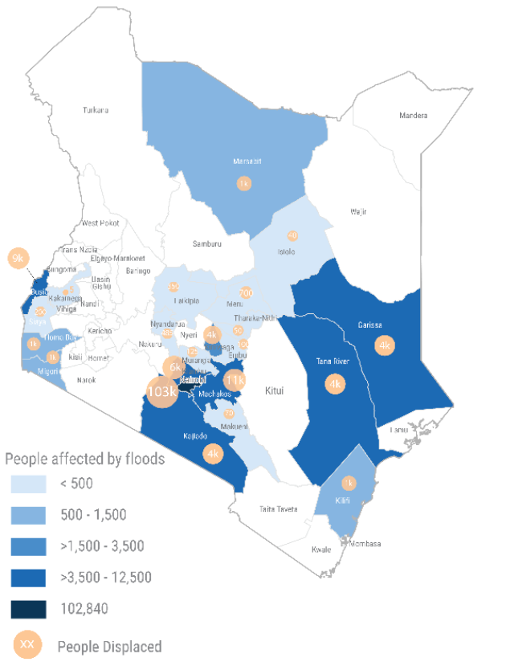
The most affected areas include Marsabit, Turkana, Tana River, Garissa, Kirinyaga, Muranga, Kiambu, Meru, Kisumu, Nairobi, and Kitui counties. As of 10 May, an estimated 267 people have been killed, 188 injured and 75 missing, while 281,835 people (56,367 families) have been displaced and almost 380,573 (76,114 families) have been affected by persistent heavy rains and flooding as of 9 May, according to the National Disaster Operations Centre (NDOC).
Humanitarian organizations are swiftly responding to the crisis by providing emergency shelter and essential items to regions at risk of flooding. They also collaborate with local authorities to assess needs and provide assistance to affected communities.
Authorities have issued warnings about the ongoing heavy rainfall across much of the country, urging residents to stay cautious and prepared.
Mobilizing the Private Sector to Support Humanitarian Response
On 28 April, the Kenya Private Sector Alliance (KEPSA), the CBI network in the country, and the KEPSA Foundation convened an emergency meeting with their members to discuss the flood response. KEPSA joined the first meeting of the National Disaster Committee and was requested by their government partners to support with provisions of food and non-food items, dignity kits, and fundraising. KEPSA Foundation has issued a call to mobilize private sector support for donations under the Private Sector Flood Response Initiative. Here is a timeline of KEPSA’s response activities:
- 1 May – KEPSA Foundation visited the Githurai area in Nairobi to assess the current situation and gather information for the distribution of food and non-food items. The overall target is to reach about 10,000 households gravely affected and displaced by the floods.
- 2 May – KEPSA Foundation started distributing food and non-food items to Kibera.
- 3 May – KEPSA, through its social arm, KEPSA Foundation, donated food items to more than 600 families adversely affected by the floods in Githurai Sub-County, Kiambu County.
- 8 May – The Deputy Government Spokesperson Ms. Mwanaisha Chidzuga joined the Private Sector Flood Response Initiative team led by KEPSA, through KEPSA Foundation and Team Pankaj Foundation in distributing food and non-food items to over 400 households affected by floods in Mathare North.
Details of financial and in-kind donations include:
- Chandaria Foundation: 10 tracks of 400 bales each of assorted food hampers distributed in Mathare, Kibera, Githurai and Mukuru and medical supplies worth KES 300,000 pledged for a free medical camp in Mai Mahiu in partnership with Asian Foundation. Distribution is being done in partnership with SHOFCO, Mama Doing Good and Global Peace Foundation.
- Team Pankaj Foundation: 16,300 mattresses, 4,000 relief food hampers, 16,000 cups and plates, 16,000 blankets and clothing items directly distributed in Mathare (Kosovo), Huruma, Kiamaiko and Mukuru Kwa Reuben slums.
- Cash Donations: KES 216,000 from Elgon Kenya and individual KEPSA members’ contributions.
- Cash Pledges: KES 500,000 from JW Seagon.
- In-Kind Pledges: 300kg of Green Grams from Mr. Patrick Obath and 20 boxes of Milk from Pearl Dairy Farms.