Strengthening Operational Readiness Through Multi-Sector Collaboration: Insights from the A-PAD International Symposium 2025
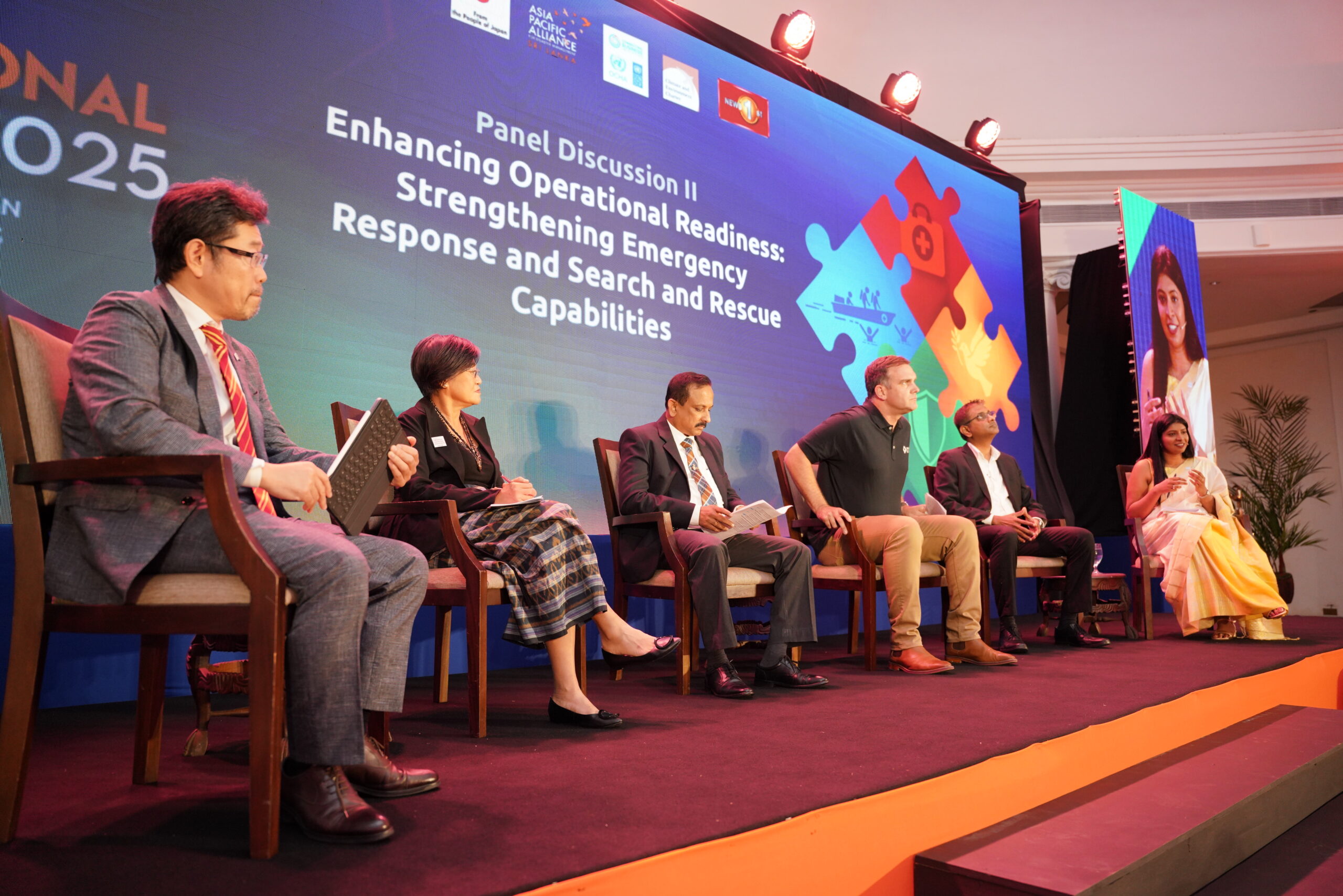
As disasters escalate across Asia-Pacific, the question of how countries strengthen real-time operational readiness has gained renewed urgency. At the Asia Pacific Alliance for Disaster Management Sri Lanka (A-PAD SL) International Symposium 2025, the OCHA-UNDP Connecting Business Initiative (CBI) moderated a discussion on “Enhancing Operational Readiness: Strengthening Emergency Response and Search and Rescue Capabilities.”
The session brought together five leaders whose work spans air-medical deployment, humanitarian logistics, port operations, community-based search and rescue, and private-sector innovation. Their insights reveal where preparedness systems must adapt — and where private-sector engagement is becoming indispensable.
A conversation grounded in operational realities
The panel included the following speakers:
- Dr. Mototaka Inaba, Project Leader, ARROWS, Peace Winds Japan
- Ms. Claire Leow, Regional Representative (Asia & Pacific), Airlink Inc.
- Air Vice Marshal Dilshan Wasage (Retd), Director, Security, Sri Lanka Ports Authority
- Mr. Richard Adams, National Director, Taskforce Kiwi, New Zealand
- Mr. Asith De Silva, Senior Manager – Social Innovation & Sustainability, Dialog Axiata PLC
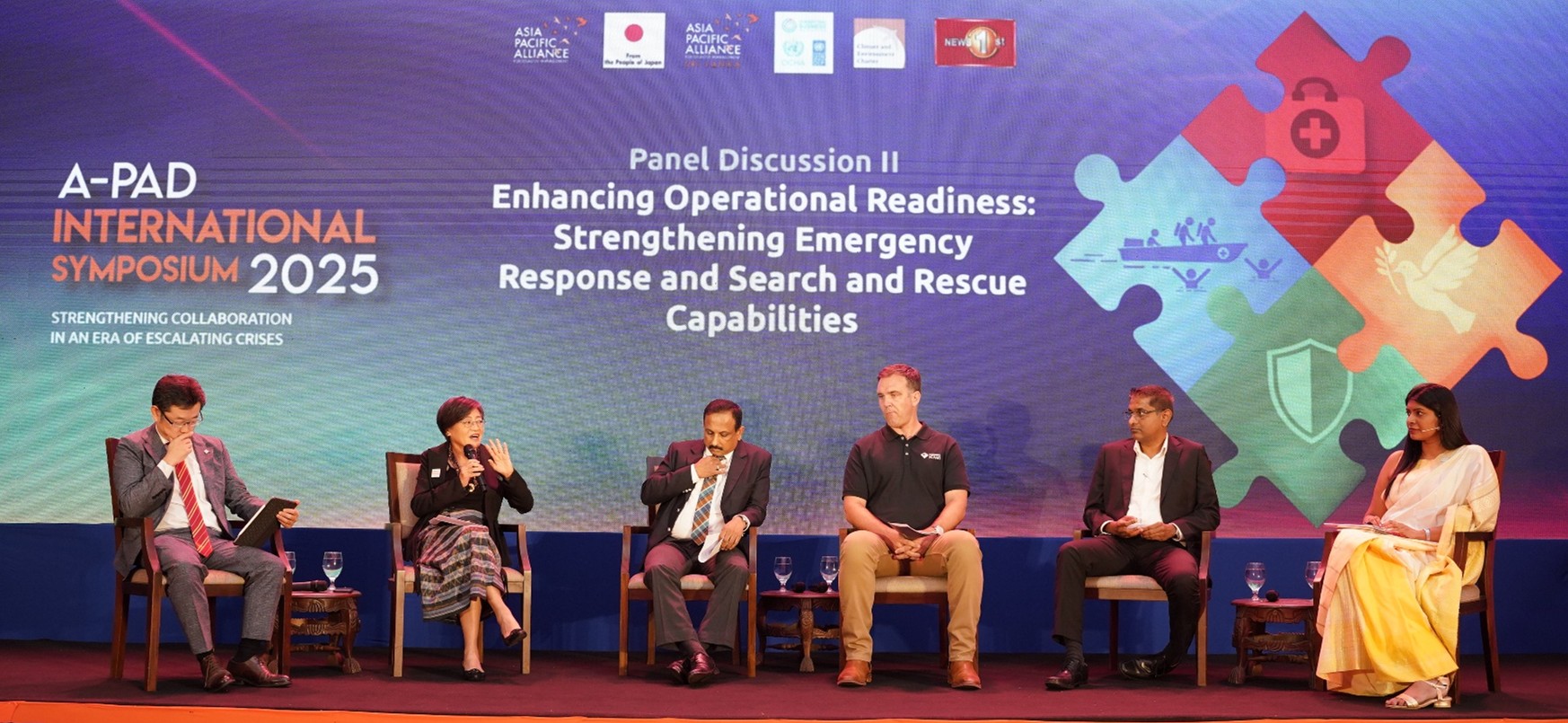
Airlink emphasized that logistics account for almost 70% of disaster response costs, underlining the need for pre-arranged transport and movement pathways across borders. Peace Winds Japan and Taskforce Kiwi shared operational insights from medical air deployments and community search-and-rescue, showing how multi-country interoperability affects the speed and effectiveness of response within the first 72 hours. The Sri Lanka Ports Authority noted that maritime access, clearance procedures, and port readiness remain under-recognized but essential elements of national preparedness, particularly as climate-induced hazards place increasing pressure on coastal systems.
Examples of private sector innovation in Sri Lanka
A strong example of private-sector innovation came from Dialog Axiata PLC, which presented two digital solutions supporting operational readiness in Sri Lanka. The Dhun platform enables rapid communication and coordination at scale, while the “Sayuru” fisherfolk safety application — now serving over 110,000 registered fishermen — incorporates a newly launched Potential Fishing Zones (PFZ) feature providing satellite-based guidance, risk information and ocean data. These tools demonstrate how private-sector digital platforms can strengthen early warning, protect livelihoods and enhance community resilience.
For CBI, the panel underscored the importance of scaling private-sector capabilities that directly support preparedness and response. Stronger logistics networks, digital early-warning systems, multi-stakeholder exercises, and integrated business continuity planning will be essential for the region’s operational readiness. As climate impacts intensify, the region will increasingly rely on coordinated, cross-sector collaboration — a space where CBI continues to play a catalytic role, connecting business leadership with humanitarian needs.
You can access the full recording of the symposium here:
